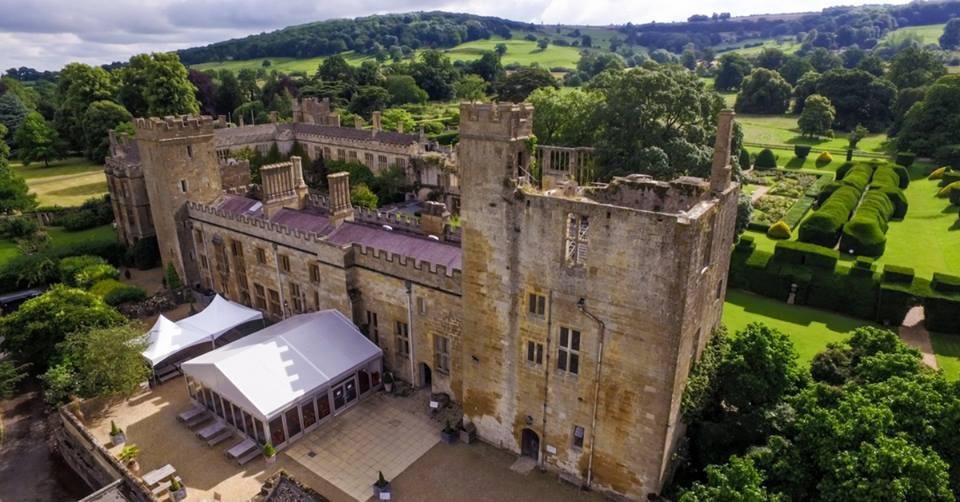
Help Unearth One of England’s Last Surviving Tudor Gardens, Enjoyed by Elizabeth I
Archaeological Dig at Sudeley Castle
Chapter 2 : Tudor Gardens & Banqueting Houses
Elizabeth
I’s love of display – and of gardens - meant that Dudley and Cecil, her two
closest advisers, famously competed for her attention by creating ever more
elaborate gardens, filled with extravagant statues, ornamental features and
exotic plants.
Every
summer, Elizabeth and her court would leave London on a royal ‘progress’ around
the country, visiting towns, villages and cities, and staying at the grand
houses of her noblemen. Everywhere she went, her hosts were expected to improve
their streets, their homes, and especially their gardens, ahead of her arrival
- and Sudeley Castle was no different.
In 1592, she arrived at Sudeley Castle on the fourth anniversary of her defeat of the Spanish Armada. The celebration, which included fireworks, feasting and music, is said to have continued for three days, and to have nearly bankrupted her host, the third Lord Chandos.
The importance of gardens, as well as temporary structures, Tudor royal tents and timber lodgings is being increasingly recognised by archaeologists and historians. These temporary structures were often enormous and elaborate undertakings that took weeks to build.
One particularly detailed description of a temporary banqueting house built at Whitehall in 1581, ahead of negotiations for Elizabeth’s potential marriage to the Duc d’Alencon, states that the 332 foot long structure took 3 weeks and 3 days to build, was held up with 30 masts, and involved 375 people. The canvas walls were painted to look like stone, the roof was painted with stars, clouds and sunbeams to look like the sky, while the insides decorated with “292 glass lights… and… all manner of strang[e] flowers… garnished with spangs of gould [and fruits like] pomegarnetts, orrnges pompions, cowcumbers, grapes, carettes, peas and such like” (B.M. Harl. MS. 293, f. 217.)